

Two Church of England members have applied to the Charity Commission for permission to mount a legal challenge against the Church Commissioners' plan to channel £100million towards slavery reparations.
Dr Bijan Omrani, a churchwarden in the Diocese of Exeter, and Revd Dr Jamie Franklin, a rector in the Diocese of Winchester, have brought forward the argument.
The initiative, known as Project Spire, was launched by the Church Commissioners following research into the Church of England's historical links to the transatlantic slave trade.
Dr Omrani and Revd Dr Franklin argue the proposed transfer of funds to a newly established body called the Fund for Healing, Repair and Justice is unlawful, and the Commissioners' charitable assets must support clergy stipends and parish ministry - not bankroll an entirely separate organisation with different aims.
The Church Commissioners maintain their predecessor institution, the Queen Anne's Bounty, had connections to the slave trade, resulting in a moral duty to make substantial reparative payments today.
The claimants firmly dispute this, arguing the degree to which the Commissioners' assets were ever "tainted" by slavery profits remains a deeply contested question among historians.
Several distinguished academics have wholly rejected the Church's own assessment of these purported links.
However, the archbishop of Canterbury, Sarah Mullally, defended the plans, saying: "Project Spire does not diminish the church’s support of or investment in parish ministry or clergy... far from it, support for dioceses and parishes continues to increase."
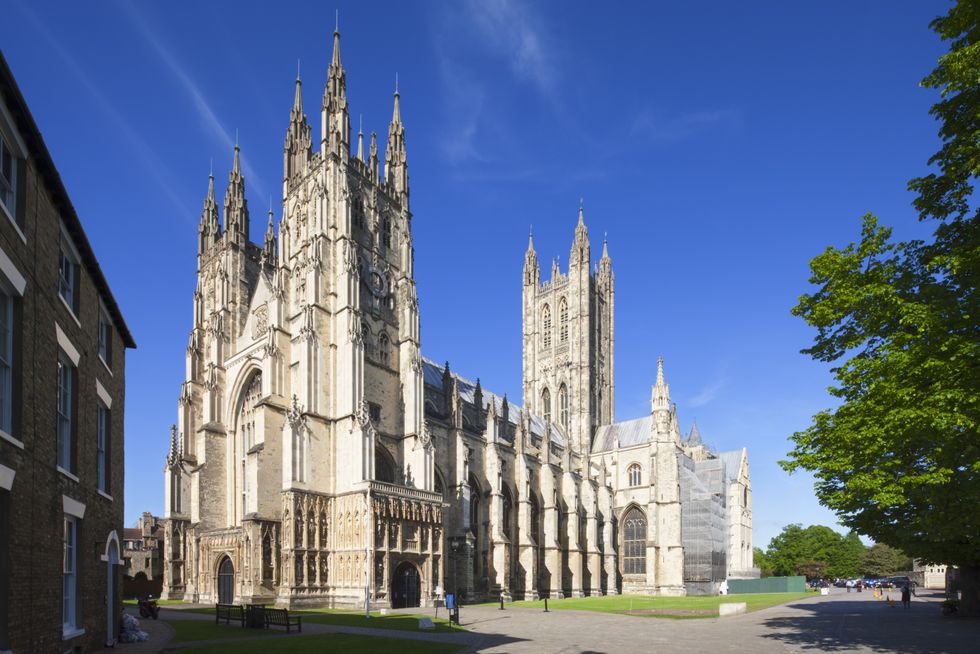
The claimants' legal case rests on the principle the Church Commissioners' assets are governed by the Ecclesiastical Commissioners Act 1840, which mandates their use for providing financial assistance to clergy and sustaining parish life.
Redirecting these resources towards an entirely new charitable purpose is, they argue, impermissible under the existing framework.
They also contend the legal threshold for establishing a "moral obligation" has not been achieved, given that the underlying historical claims linking the funds to slavery are, in their view, without foundation.
Dr Omrani said it is a "very serious matter" and the Commissioners are "giving away money which is desperately needed" by the Church.
LATEST UK NEWS
- Man mauled to death in tiger attack named and pictured holding a Bible and a crossbow
- Bomb squad swarms to house as 'hazardous chemicals' found after death of homeowner
- Pensioner preparing to make history as 71-year-old beauty pageant contender: 'Age doesn't matter!'
He claimed the plans were based on the "misconceived basis" the Church benefits from slavery 300 years later.
"This case is about ensuring accountability, transparency and fidelity to the Church's charitable purposes. Project Spire fails on all three fronts," he stated.
Revd Dr Franklin spoke from direct personal experience of the funding crisis: "I'm in charge of a growing congregation with significant weekly responsibilities for preaching, pastoral care, administrative oversight and occasional offices such as weddings and funerals.
"However, I currently receive no stipend for this work, having to support myself and my family through my writing and podcasts."

He added that Project Spire "cannot be in the best interests of the grassroots Anglican community in this country."
James Gardner, a partner at Conrathe Gardner LLP representing the two claimants, described the proceedings as "a landmark case."
"Our clients want to build up the Church of England, not put parishes under even greater financial pressure," he said.
The claimants are seeking declarations that neither the Charity Commission, the Attorney General nor the Court possesses the authority under section 106 to sanction the proposed payment, and that no alternative legal mechanism exists to permit it.
They also want the Court to refuse the payment on its merits and to grant an injunction barring the Commissioners from proceeding with the application or expending further resources on Project Spire.
This case represents the first legal challenge ever mounted against the Charity Commission's powers under section 106 of the Charities Act 2011, raising fundamental questions about the proper boundaries of ex-gratia payments in charity law.
The challenge also shines a spotlight on governance and accountability within one of Britain's most prominent national institutions.
It arrives at a moment when parishes throughout England are grappling with severe and persistent underfunding - a crisis that the claimants say makes the proposed diversion of £100 million all the more unconscionable.
Our Standards: The GB News Editorial Charter
from GB News https://ift.tt/piNJ39l
Two Church of England members have applied to the Charity Commission for permission to mount a legal challenge against the Church Commissioners' plan to channel £100million towards slavery reparations.
Dr Bijan Omrani, a churchwarden in the Diocese of Exeter, and Revd Dr Jamie Franklin, a rector in the Diocese of Winchester, have brought forward the argument.
The initiative, known as Project Spire, was launched by the Church Commissioners following research into the Church of England's historical links to the transatlantic slave trade.
Dr Omrani and Revd Dr Franklin argue the proposed transfer of funds to a newly established body called the Fund for Healing, Repair and Justice is unlawful, and the Commissioners' charitable assets must support clergy stipends and parish ministry - not bankroll an entirely separate organisation with different aims.
The Church Commissioners maintain their predecessor institution, the Queen Anne's Bounty, had connections to the slave trade, resulting in a moral duty to make substantial reparative payments today.
The claimants firmly dispute this, arguing the degree to which the Commissioners' assets were ever "tainted" by slavery profits remains a deeply contested question among historians.
Several distinguished academics have wholly rejected the Church's own assessment of these purported links.
However, the archbishop of Canterbury, Sarah Mullally, defended the plans, saying: "Project Spire does not diminish the church’s support of or investment in parish ministry or clergy... far from it, support for dioceses and parishes continues to increase."
The claimants' legal case rests on the principle the Church Commissioners' assets are governed by the Ecclesiastical Commissioners Act 1840, which mandates their use for providing financial assistance to clergy and sustaining parish life.
Redirecting these resources towards an entirely new charitable purpose is, they argue, impermissible under the existing framework.
They also contend the legal threshold for establishing a "moral obligation" has not been achieved, given that the underlying historical claims linking the funds to slavery are, in their view, without foundation.
Dr Omrani said it is a "very serious matter" and the Commissioners are "giving away money which is desperately needed" by the Church.
LATEST UK NEWS
- Man mauled to death in tiger attack named and pictured holding a Bible and a crossbow
- Bomb squad swarms to house as 'hazardous chemicals' found after death of homeowner
- Pensioner preparing to make history as 71-year-old beauty pageant contender: 'Age doesn't matter!'
He claimed the plans were based on the "misconceived basis" the Church benefits from slavery 300 years later.
"This case is about ensuring accountability, transparency and fidelity to the Church's charitable purposes. Project Spire fails on all three fronts," he stated.
Revd Dr Franklin spoke from direct personal experience of the funding crisis: "I'm in charge of a growing congregation with significant weekly responsibilities for preaching, pastoral care, administrative oversight and occasional offices such as weddings and funerals.
"However, I currently receive no stipend for this work, having to support myself and my family through my writing and podcasts."
He added that Project Spire "cannot be in the best interests of the grassroots Anglican community in this country."
James Gardner, a partner at Conrathe Gardner LLP representing the two claimants, described the proceedings as "a landmark case."
"Our clients want to build up the Church of England, not put parishes under even greater financial pressure," he said.
The claimants are seeking declarations that neither the Charity Commission, the Attorney General nor the Court possesses the authority under section 106 to sanction the proposed payment, and that no alternative legal mechanism exists to permit it.
They also want the Court to refuse the payment on its merits and to grant an injunction barring the Commissioners from proceeding with the application or expending further resources on Project Spire.
This case represents the first legal challenge ever mounted against the Charity Commission's powers under section 106 of the Charities Act 2011, raising fundamental questions about the proper boundaries of ex-gratia payments in charity law.
The challenge also shines a spotlight on governance and accountability within one of Britain's most prominent national institutions.
It arrives at a moment when parishes throughout England are grappling with severe and persistent underfunding - a crisis that the claimants say makes the proposed diversion of £100 million all the more unconscionable.
Our Standards: The GB News Editorial Charter


0 Comments
Don't share any link